Wellness
The Role of Swim Spas in Rehabilitation
By Headlines Team
October 5, 2026
Field Notes
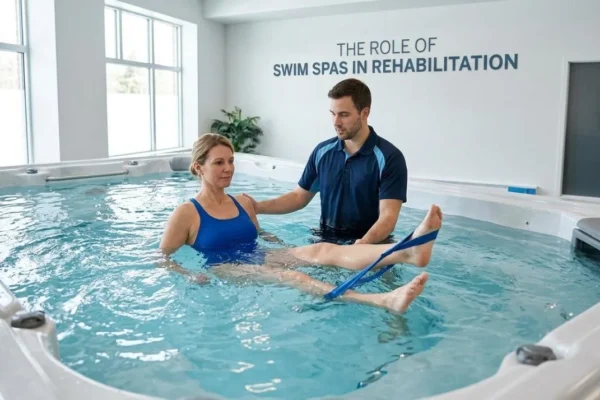
Rehabilitation often requires a careful balance between movement and recovery. After an injury, surgery, or period of reduced mobility, traditional exercises can sometimes feel difficult because they place stress on joints, muscles, or other areas that are still recovering. Water-based exercise offers another approach by creating an environment where movement can be supported while resistance is still available.
Swim spas can be particularly useful in this setting because they combine water immersion with space for controlled movement. Depending on the individual’s needs and the recommendations of their healthcare or rehabilitation professional, aquatic exercise can become part of a broader recovery routine.
The role of a swim spa in rehabilitation is not to replace professional treatment. Instead, it can provide an environment that supports low-impact movement, gradual conditioning, flexibility work, and other forms of exercise that may be difficult to perform on land.
Why Water Can Be Helpful During Rehabilitation
Water changes the way the body responds to movement.
When a person enters a pool or swim spa, the water provides buoyancy. This reduces the amount of body weight that must be supported by the joints, which can make certain movements feel easier.
At the same time, water provides resistance. Moving an arm or leg through water requires more effort than moving it through air, allowing someone to perform strengthening exercises without necessarily using traditional weights.
This combination of support and resistance makes aquatic exercise an interesting option for rehabilitation programs.
Reduced Impact on Joints
One of the most commonly discussed advantages of aquatic exercise is reduced impact.
Activities such as walking, squatting, or leg exercises can place significant loads on the knees, hips, ankles, and other joints when performed on land. Water can reduce the effective load placed on the body because buoyancy supports part of the person’s weight.
This can make certain movements more comfortable.
For someone gradually returning to physical activity, being able to practice movement in a lower-impact environment may help make exercise feel more manageable.
However, the appropriate amount of activity depends on the individual. Anyone recovering from an injury or medical procedure should follow guidance from their healthcare provider or rehabilitation professional.
Water Provides Natural Resistance
Water does more than support the body. It also creates resistance.
Every time a person moves through water, the water pushes against that movement. The faster the movement, the greater the resistance can become.
This allows individuals to perform controlled strengthening exercises without necessarily relying on weights or resistance machines.
For example, someone may perform gentle movements involving the arms or legs while standing in the water. These exercises can engage muscles while keeping the movements relatively controlled.
The resistance can also be adjusted naturally by changing movement speed or the position of the body and limbs.
Warm Water Can Support Relaxation
Temperature can also influence the experience of aquatic exercise.
Warm water may help muscles feel more relaxed and can make movement more comfortable for some people. A warm-water environment may be particularly appealing when the goal is gentle mobility rather than intense exercise.
However, water temperature should be appropriate for the individual and the intended activity. People with certain medical conditions may have specific restrictions regarding heat exposure, so professional guidance is important.
A swim spa’s ability to maintain a consistent water temperature can make it convenient for people who want regular access to aquatic exercise.
Supporting Range of Motion
Maintaining or improving range of motion can be an important part of many rehabilitation programs.
Stiffness can make normal movements more difficult, particularly after periods of inactivity. Water can provide support while a person gradually works through controlled movements.
For example, someone might perform gentle leg movements, arm exercises, or walking patterns in the water.
Because the water provides buoyancy, certain movements may feel less intimidating than they would on land.
The objective is not necessarily to push through discomfort. Instead, aquatic movement can provide a controlled environment for gradually rebuilding mobility according to an individual’s rehabilitation plan.
Swim Spas Can Support Gradual Conditioning
Recovery often involves rebuilding endurance and strength gradually.
A swim spa can provide an environment where activity can be adjusted according to a person’s current abilities.
Someone at an early stage of recovery might begin with simple walking or mobility exercises. As strength and confidence improve, they may gradually increase the duration or complexity of their movements.
This gradual approach can be useful because rehabilitation is often a process rather than a single event.
The goal is to progress appropriately rather than attempting to return immediately to previous activity levels.
Resistance Currents and Controlled Swimming
Many swim spas include a current that allows users to swim in place.
This can provide an opportunity for swimming-related exercise without requiring a full-size swimming pool.
For individuals who are cleared for swimming or water-based conditioning, a controlled current may allow them to adjust the intensity of their activity.
The current can potentially be used for different levels of exercise depending on the equipment and the person’s capabilities.
However, swimming is not appropriate for every stage of rehabilitation. Certain injuries or procedures may require restrictions on swimming, range of motion, or water exposure.
Professional guidance should always take priority.
Balance and Stability Exercises
Balance can be another important component of rehabilitation.
Water provides a different environment for practicing stability because it surrounds the body and creates resistance to movement. This can allow certain balance exercises to be performed in a more controlled setting.
Simple activities may include standing exercises, controlled weight shifting, or carefully supervised walking patterns.
The appropriate exercises depend heavily on the individual’s condition.
People with significant balance limitations should not exercise in a swim spa without appropriate supervision, because water does not eliminate the risk of falling or injury.
Building Confidence Through Movement
Rehabilitation is not only physical. Confidence can also influence how someone approaches movement after an injury or period of limited activity.
A person who feels uncertain about putting weight on an injured area may find aquatic movement more approachable because the water provides support.
Being able to complete controlled movements successfully can help someone become more comfortable with physical activity.
This does not mean that a swim spa should be viewed as a psychological treatment. Rather, a supportive exercise environment can make regular movement feel more accessible and manageable.
How Swim Spas Can Fit Into a Rehabilitation Routine
A swim spa can potentially be incorporated into a rehabilitation routine in several ways.
Depending on professional recommendations, a session might include:
- Gentle warm-up movements.
- Walking through the water.
- Range-of-motion exercises.
- Light strengthening movements.
- Controlled swimming or resistance-current exercise.
- Gentle mobility work.
- Recovery or relaxation.
The exact routine should be based on the individual’s needs and medical guidance.
Someone recovering from a knee injury, for example, may have very different exercise requirements from someone recovering from shoulder surgery.
Consistency Can Be Easier With Home Access
One potential advantage of owning a swim spa is convenience.
Access to an aquatic facility can involve transportation, scheduling, membership fees, and facility hours. Having a swim spa at home may make it easier to incorporate water-based exercise into a regular routine.
For someone who has been advised to perform specific aquatic exercises, convenient access may make consistency easier.
That said, home equipment does not replace professional supervision when supervision is needed.
A physical therapist or other qualified professional can help determine which exercises are appropriate and how they should progress.
What to Consider When Choosing a Swim Spa for Rehabilitation
Not every swim spa is designed with the same features.
If rehabilitation is one of the primary reasons for considering a swim spa, it can be helpful to evaluate features based on practical needs rather than appearance alone.
Consider factors such as:
- Water temperature controls
- Entry and exit design
- Handrails or support features
- Seating areas
- Water depth
- Current adjustment options
- Interior space
- Steps
- Ease of maintenance
- Accessibility
- Safety features
Ease of entry and exit may be especially important for someone with limited mobility.
A model that looks impressive but is difficult to enter may not be the best option for someone using it primarily for rehabilitation.
Safety Should Be a Priority
Aquatic exercise can be beneficial, but water environments also involve safety considerations.
Anyone with limited mobility, balance problems, or significant weakness should take appropriate precautions.
Important considerations include:
- Using stable entry and exit points
- Avoiding exercising alone when supervision is recommended
- Keeping the surrounding area free of obstacles
- Following recommended water temperatures
- Staying hydrated
- Avoiding overexertion
- Following medical restrictions
- Keeping children supervised around the water
People with medical conditions should discuss aquatic exercise with an appropriate healthcare professional before beginning a new rehabilitation routine.
Rehabilitation After Surgery
Post-surgical rehabilitation varies considerably depending on the procedure.
Some individuals may eventually benefit from aquatic exercise because water can reduce impact and provide controlled resistance. Others may need to avoid water entirely for a period of time because of incision care, infection concerns, or other medical restrictions.
The timing of aquatic exercise should therefore never be based solely on the presence of a swim spa.
A healthcare provider or physical therapist should determine when water-based activity is appropriate.
Once cleared, a swim spa may provide a convenient environment for gradually reintroducing movement.
Rehabilitation After Joint Injuries
Joint injuries can sometimes make land-based exercise uncomfortable.
Water may provide a lower-impact environment for certain movements while still allowing muscles to work against resistance.
For example, a person recovering from a knee or hip problem may be able to perform certain controlled movements in water that are difficult on land.
Again, the specific exercises should depend on the injury and rehabilitation plan.
The goal should be controlled progression rather than pushing the injured joint beyond its current capabilities.
Swim Spas and Older Adults
Older adults may also use aquatic exercise as part of an active lifestyle, particularly when traditional high-impact exercise is uncomfortable.
Water-based movement can provide an opportunity to work on mobility, strength, endurance, and balance while reducing some of the impact associated with land-based exercise.
For older adults, accessibility becomes particularly important.
A swim spa should be easy to enter and exit, and the surrounding area should provide a stable walking surface.
Before beginning a new exercise routine, older adults with medical conditions should consult their healthcare provider.
The Difference Between Rehabilitation and General Exercise
It is important to distinguish rehabilitation from general fitness.
General exercise typically focuses on improving overall strength, cardiovascular fitness, flexibility, or endurance.
Rehabilitation is more individualized. It often addresses a specific injury, surgery, movement limitation, or physical condition.
A swim spa can potentially support both purposes, but rehabilitation exercises should be based on professional recommendations.
Using a swim spa does not automatically make an exercise routine therapeutic.
The value comes from using the environment appropriately for the individual’s goals and limitations.
Why Location and Climate Can Matter
For homeowners considering aquatic equipment, climate can also influence how frequently a swim spa is used.
In areas where outdoor swimming pools may have seasonal limitations, a heated swim spa can potentially provide a more consistent environment throughout the year.
For example, someone researching a swim spa buffalo ny may be particularly interested in year-round access because colder weather can make outdoor aquatic activities less practical for extended periods.
The ability to use a swim spa regardless of the season can make it a more versatile addition to a home.
Combining Professional Therapy With Home Exercise
A home swim spa can be most useful when it complements professional care.
A physical therapist may identify specific exercises that can safely be performed in water. The individual can then potentially continue appropriate exercises at home, provided they have been cleared to do so.
This can create a connection between professional rehabilitation sessions and independent activity.
The therapist may also provide guidance regarding repetitions, duration, intensity, and progression.
As recovery progresses, the exercise routine may change.
FAQs
Are swim spas good for rehabilitation?
Swim spas can provide a supportive environment for certain rehabilitation exercises because water offers buoyancy and resistance. However, whether a swim spa is appropriate depends on the individual’s condition and rehabilitation plan.
Can you use a swim spa after surgery?
It depends on the type of surgery and the stage of recovery. Some procedures require avoiding water until an incision has healed or a healthcare provider gives clearance. Always follow the instructions provided by your medical team.
Does swimming help with recovery?
Swimming and other aquatic exercises may support strength, mobility, and cardiovascular conditioning for some individuals. However, swimming is not appropriate for every injury or stage of rehabilitation.
Can water exercise help with joint pain?
Water-based exercise may make movement more comfortable for some people because buoyancy can reduce the load placed on joints. A healthcare professional can help determine whether aquatic exercise is appropriate.
Do I need a physical therapist to use a swim spa?
You do not necessarily need a physical therapist simply to use a swim spa for general recreation. However, if you are using one as part of rehabilitation, professional guidance can help ensure that your exercises are appropriate for your condition.
What features should I look for in a rehabilitation swim spa?
Accessibility, comfortable entry and exit, water temperature controls, adequate space, adjustable currents, support features, and safety considerations can all be important. The best features depend on the individual’s specific needs.
Conclusion
Swim spas can provide a versatile environment for certain rehabilitation and recovery activities. The combination of buoyancy, resistance, warm water, and controlled movement can make aquatic exercise an appealing option for people working to rebuild mobility, strength, endurance, and confidence.
However, a swim spa should complement professional rehabilitation rather than replace it. The appropriate exercises, water temperature, intensity, and timing depend on the individual’s health and recovery needs.
For people who have been cleared for aquatic exercise, having convenient access to a swim spa may make regular movement easier to incorporate into daily life. With appropriate guidance and safety precautions, water-based exercise can become a useful part of a broader approach to rehabilitation and long-term physical activity.